
SR-9/Zion-Mt. Carmel Highway (ZMCH) Construction
Zion Travel Tips
Can You Take an Electric Car on a Road Trip to Zion National Park?
Updated:
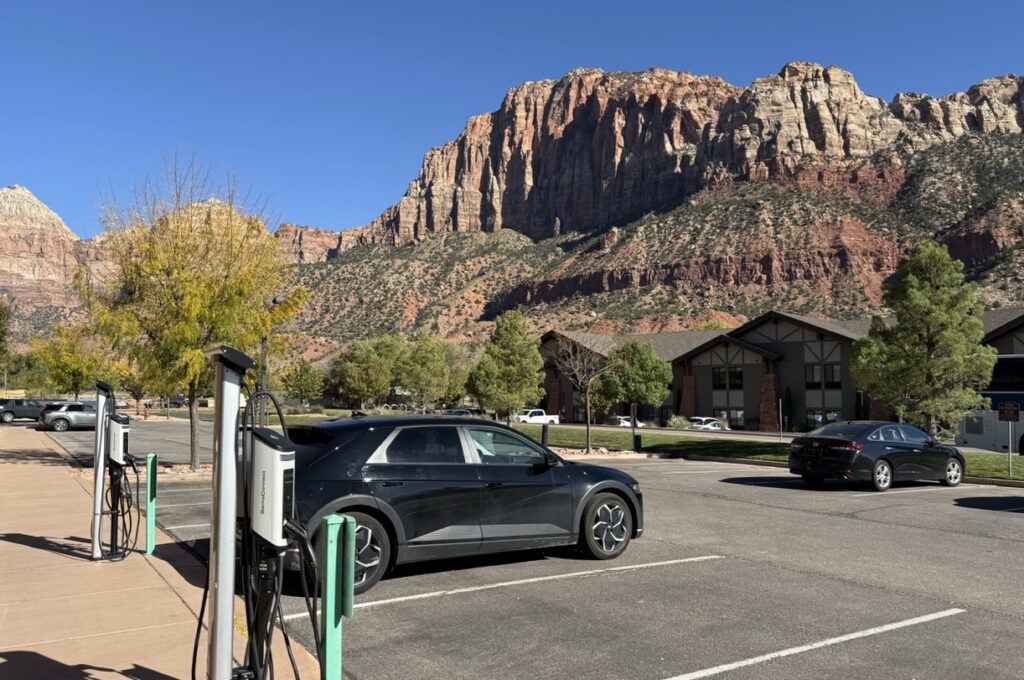
Yes, you can do an EV road trip to Zion National Park. It just takes some planning. Read on for advice from one electric vehicle driver about all you need to know before you venture out. With proper planning and the right apps, electric vehicle owners can confidently make the most of their trip to Zion National Park. Thousands of EV drivers complete this journey successfully each year. The key challenges include managing desert heat, mountain elevation changes, and spacing between charging stations.
Planning Ahead: Knowing Your Range and Planning Your Route
Know Your Vehicle’s Range
A successful EV road trip to Zion National Park means treating your car’s range conservatively. Between 2015 and 2020, the number of EV charging ports more than doubled in the US [AFDC]. The infrastructure to support EVs continue to grow and longer trips are possible with good planning.
Keep in mind that older electric vehicles typically get less range than newer ones, and the range varies widely from make and model.
- Know your range. Use your own experience and tools like A Better Route Planner (ABRP) to understand your vehicle’s real-world range under expected conditions.
- Research charging options in advance. In remote areas, don’t just plan your primary charging stops — have a backup plan. If a charger is out of service or conditions are worse than expected, know your bailout option before you need it. Use tools like the Alternative Fueling Stations (desktop version) in advance.
What Apps Do I Need for EV Charging Near Zion National Park?
Get to know the charging landscape now and it will save you a lot of headache on the road. You’ll need multiple charging network apps because Southern Utah uses various providers:
- Electrify America (CCS/J1772) 👉 Fast chargers in St. George, Cedar City, Beaver, and Scipio
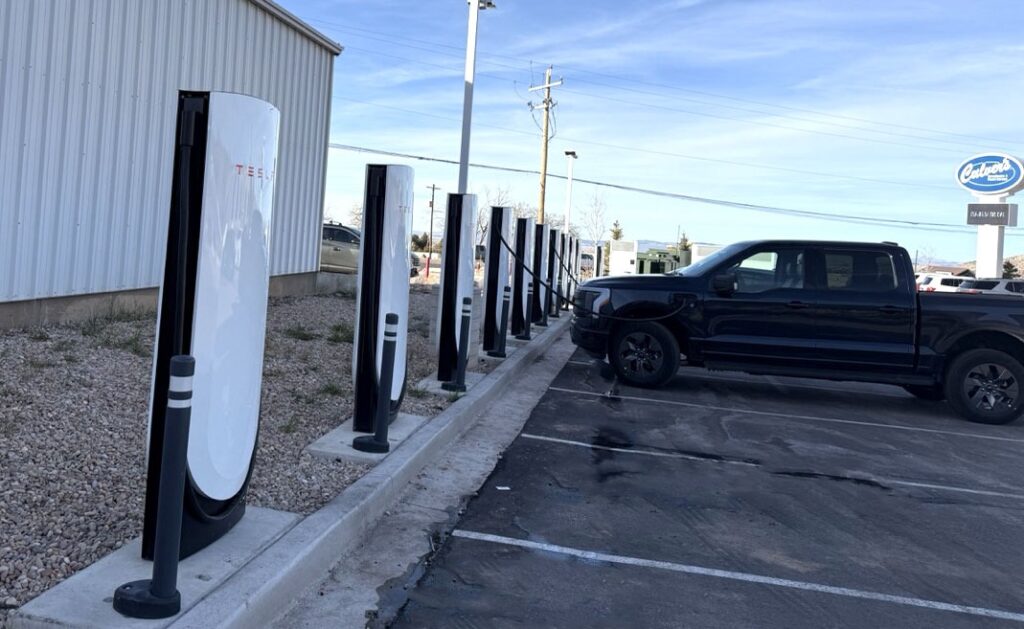
- Tesla Superchargers (NACS) 👉Toquerville at Anderson Junction, Cedar City, Beaver, Scipio
- PlugShare 👉 Shows real-time charger status with user reviews
- Blink 👉 Smaller network in Southern Utah. These chargers are located at a few hotels in Springdale.
- Chargepoint 👉 Network with chargers in Kanab and St. George
*Pro Tip: Set up payment methods in your apps before leaving home. Most stations also have phone numbers for credit card payment if apps malfunction.
📱 Smart Phone Applications
← Scroll to see full table →
| App Name | Plug Types | Best Features |
|---|---|---|
| A Better Route Planner | CCS / J1772 | Select your make and model and get a customized route based on your vehicle’s range. |
| Alternative Fueling Stations | ALL | Filter by network and plug type. Provides a list of acceptable payment options. |
| PlugShare | ALL (incl. NACS) | Search for chargers across all networks and plug types including DC fast and AC Level 2, plus user reviews indicating recent performance. |
| Electrify America | CCS / J1772 | Set up payment in the app for fast charging for CCS plug types. |
| Tesla | NACS | Set up payment in the app for fast charging for NACS plug types. |
| Blink Charging | J1772 (L2) | A few Zion-area hotels use this smaller charging network. |
| ChargePoint | ALL | A small network with a location in Kanab. |
What Type of Charging Plug Does My EV Have and Do I Need an Adapter?
Know your charging plug type before departure:
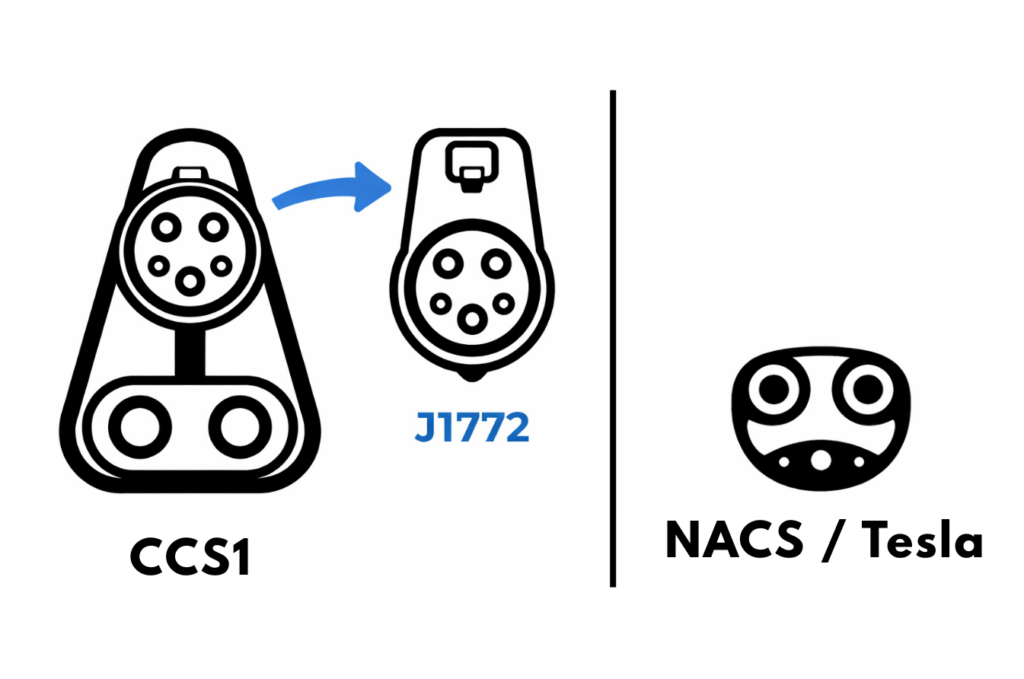
- J1772: 5-pin is standard AC Level 1/2 charging (home/public, up to 19.2 kW), most non-Tesla EVs have the J1772. Also referred to as SAE or J Plug.
- CCS1: An extension of J1772 that adds two large pins for DC fast charging (up to 350 kW). Sometimes CCS1 is referred to as Combined or Combo.
- NACS: Tesla vehicles and some newer EVs
- CHAdeMO: Manufacturers began phasing out in North America around 2020, shifting toward the CCS standard. Because of that most of what we focus on is the primary plugs in circulation.
*Pro Tip: Purchase a charging adapter to access the largest possible network of stations. This dramatically increases your charging options throughout Southern Utah.
Charging
Where Can I Charge My Electric Vehicle Near Zion National Park?
Charging inside or near the park is the best way to get a full battery for your daily drives.
*Pro tip: Leave your car plugged in or parked at your hotel and use the SunTran bus and free shuttle to get around. For more information about buses and shuttles, check out Traveler Resources.
EV Charging Near Zion National Park
Options range from slow Level 2 chargers inside the park to fast DC chargers in nearby towns.
⚡⚡ Fast Charging Nearby
Level 3 · DC Fast Charging: Tesla and Electrify America
- The quickest charging option for long-distance travel — ideal before or after your park visit.
- New Rivian Adventure and IONNA fast chargers have been added in Beaver.
- Most newer Tesla Superchargers are now open to non-Tesla EVs (CCS vehicles may need an adapter).
📍 Beaver
📍 Cedar City
📍 Toquerville (Tesla)
📍 Washington
Zion Canyon Visitor Center & Kolob Canyons Visitor Center
Level 2 · Slower
Two public plugs available to all visitors.
Requires a $5 access code purchased at the bookstore. Arrive early — this is a popular spot!
Zion National Park Lodge
Level 2 · Slower
Hotel guests only. Perfect if you’re staying overnight.

Springdale Hotels
Varies by property
Many hotels in Springdale offer EV charging for guests.
Always ask about on-site EV charging when you book.
Gateway Communities
Varies by property
Virgin, La Verkin, and Hurricane often have charging at hotels — and may be less crowded than Springdale.
SunTran bus service connects to the park (0.4 mi to Zion Canyon Village & South Entrance).
Using Local Transit to Save Range
Once you get into the town of Springdale, you can save your main battery for getting to the park and back by using the great public transportation! Zion was a pioneer in electric bus transit — the park’s shuttle fleet is electric, meaning even if you arrived in a gas vehicle, your journey into the canyon during peak season will be electric [NPS].
- Springdale Line Shuttle: Use the free town shuttle to get you into the heart of Springdale and to the main park entrance.
- Zion Canyon Shuttle: Once you are at the Visitor Center, you will use the free park shuttle to travel up the scenic drive inside Zion Canyon.
Note: NPS shuttles, both Springdale Line and the Zion Canyon Shuttle are out of service during winter months, excluding the dates leading up to Christmas and New Year’s Day.
Staying at one of the gateway communities to the park such as Hurricane, La Verkin or Virgin? Some hotels in these areas have chargers available. Don’t forget there is a new bay of Tesla Superchargers in Toquerville at the travel center near Anderson Junction. Call ahead to verify or check the availability of nearby chargers on your apps. If you prefer to leave your EV at your hotel and ride public transportation to the park, you have the following options.
- SunTran Zion Route: St. George’s SunTran bus provides service along SR-9 through the gateway communities all the way to Lion Boulevard in Springdale.
- It’s a 10 minute walk to the pedestrian entrance at the south end of the park.
- Runs approximately every hour during the day, with NO service on Sundays.
- This route goes from St. George and stops in Washington, Hurricane, LaVerkin, Virgin, and Springdale.
- Zion White Bison Shuttle: The Zion White Bison (ZWB) property boasts the Zion Corridor Park & Ride on-site, one of Virgin’s SunTran stops.
- ZWB also provides a shuttle service at the same cost as SunTran to fill some
- gaps in bus service, such as Sundays and holidays.
- Coming from Zion, the ZWB Shuttle does not provide service beyond Virgin stops (including Kolob Terrace Rd and Zion Corridor Park & Ride).
For more information about buses and shuttles, check out Traveler Resources.
Managing Your Range and Battery Use
How Does Terrain Affect My Battery?
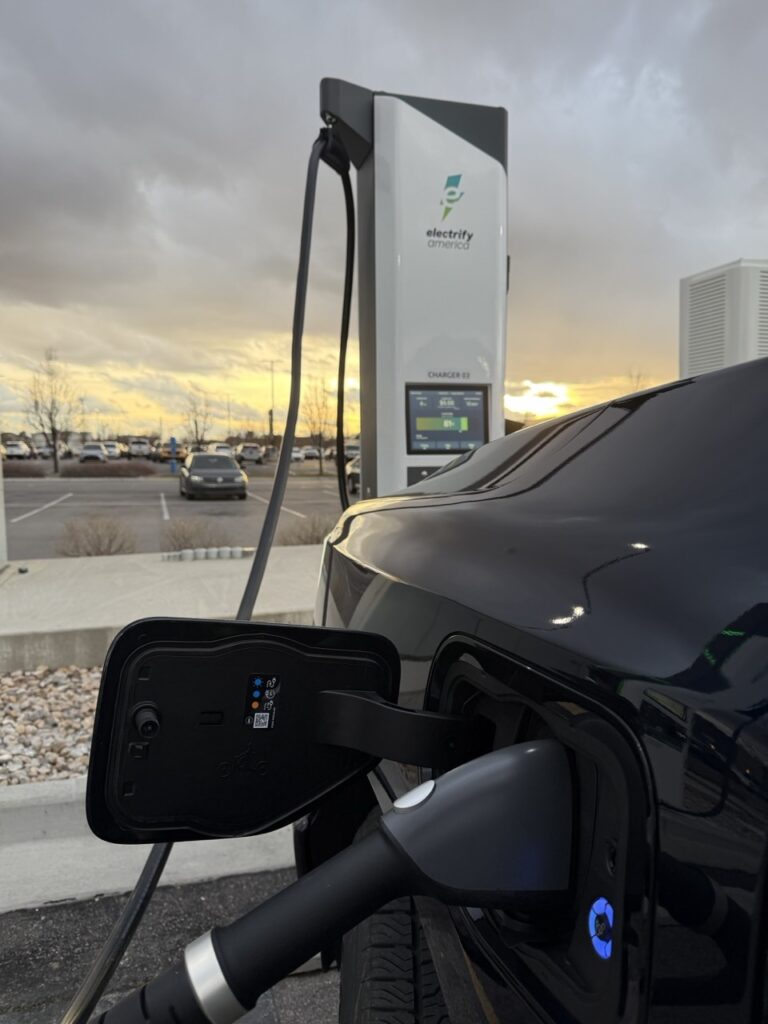
The terrain around Zion—specifically the steep climbs and descents—will change your range more than flat-land driving. It’s a literal uphill battle at times.
- Elevation Impact: Driving up steep hills uses significantly more energy. When you start climbing out of a canyon, watch your range drop faster than usual. Don’t worry, this is normal!
- The Magic of Braking: This is where your EV truly shines. Thanks to EVs regenerative braking you can make up some of those range miles on the downhill.
Critical Elevation Point on I-15: Pine Creek Summit (Milepost 124.8):
- Elevation: 6,611 feet above sea level
- Located between Fillmore and Beaver
- Border of Beaver and Millard counties
*Pro Tip: Plan charging stops in Scipio (north) or Beaver (south) of this summit to prevent anxiety driving the elevation.
How Does Desert Heat Affect My EV Battery?
Your A/C and your right foot are the biggest energy consumers.
Air Conditioning Impact: Heavy A/C use in Southern Utah’s heat drains the battery faster.
Highway Speed Impact: Reducing speed from 75 mph to 70 mph on I-15 stretches can provide enough extra range to reach your next charging station. Wind resistance increases exponentially with speed.
How Does Towing Affect My Battery?
- Assume half your normal range when towing and plan charging stops more often
- Slow down: Driving 60-70 mph can meaningfully extend range while towing
- Pre-condition the battery — start with a full charge and a warm/cool battery
- Use towing mode: Many EVs, such as Tesla, F-150 Lightning, and Rivian, have a towing mode
- Check your vehicle’s tow rating; exceeding it stresses both the battery and drivetrain
What Should I Do If My EV Battery Is Running Low?
Emergency Battery Conservation Steps
If you find yourself under 10% with a dwindling range, here is your plan to squeeze out every possible mile:
- Turn off climate control (A/C and heat)
- Reduce speed to the speed limit or slightly below
- Check for any nearby charger, even if off-route or behind you
What Do I Do If My Electric Car Runs Out of Battery?
EV Emergency Plan:
- Pull over safely, completely off the road
- Turn on hazard lights
- Call roadside assistance (many EV manufacturers include this service)
- Request a flatbed tow specifically – this is critical!
Why Use a Flatbed Tow for EVs?
Always request flatbed towing for electric vehicles. Flatbeds lift all four wheels off the ground, protecting your drivetrain and electric motors from damage. Standard towing can destroy EV components.
Accessory Mode Warning: Protect Your 12V Battery
Be careful using your EV in Accessory Mode (pressing the start button without holding the brake in a Hyundai, or engaging “Keep Accessory Power On” in a Tesla) for extended periods. This drains the small 12-volt battery that runs your electronics—a different system than your main battery—which can lead to a dead car and ruin your trip.
*Pro Tip: Use the utility mode, often found under EV Settings. Utility mode runs climate and radio off the main battery, sparing the 12V. Tesla calls theirs dog mode or camp mode. Or you can just be sure to exit the vehicle promptly and not leave the car running in accessory mode.
Can I Visit Multiple Parks on an EV Road Trip?
Yes, but keep in mind that charging becomes much scarcer traveling east and south from Zion. The good news: St. George and Kanab serve as your two charging anchors for the entire region. Plan your route around them, and you can visit every park below.
The Golden Rule: Maintain a minimum 20% charge buffer between remote charging stations. This accounts for unexpected charger outages, wait times, elevation changes, and detours.
When venturing into truly remote areas, think beyond just getting there — calculate how much charge you’ll need to return to a known, reliable charger. Set a turnaround state of charge (SOC): if your battery drops to that level before you reach your destination, it’s time to head back. This mindset is what allows EV drivers to safely explore Utah’s most remote parks and roads.
Nearby State Parks: What to Know for EV Drivers
Please note: None of the Utah state parks listed below have on-site EV charging. Always charge before you go.
- The St. George area state parks are effortless EV day trips.
- For Coral Pink Sand Dunes, treat Kanab as your charge stop.
- For Bryce Canyon, Ruby’s Inn’s new Supercharger makes it one of the most EV-friendly national park gateways in Utah.
- Always verify charger availability on PlugShare before departure.
⚡ EV Charging Quick Reference: Southern Utah State Parks
← Scroll to see full table →
| Park | Distance from St. George | Nearest Charging |
|---|---|---|
| Snow Canyon | 11 miles | St. George |
| Sand Hollow | 15–20 miles |
St. George
Hurricane
Toquerville Tesla
|
| Quail Creek | 10–25 miles |
St. George
Hurricane
Toquerville Tesla
|
| Gunlock | 35 miles | St. George |
| Coral Pink Sand Dunes | ~75 miles |
Kanab City
28 N 100 E, Kanab, UT 84741 CCS/J1772
|
| Bryce Canyon | ~90 miles |
Ruby’s Inn
26 S Main St, Bryce Canyon City, UT 84764 Tesla
|
What Are the Most Important Tips for EV Road Trips to Zion?
Top 10 EV Zion Road Trip Essentials
- Download all charging apps and set up payment before departure
- Purchase a charging adapter for maximum station access
- Plan conservative charging stops with 20% buffer minimum
- Plan to stop at fast chargers on your way to and from Zion National Park
- Ask hotels about EV charging when booking
- Use free shuttles to preserve battery while exploring
- Reduce highway speed to extend range
- Plan for elevation changes, especially Pine Creek Summit
- Know your plug type (CCS1 or NACS/Tesla)
- Don’t drain your 12V battery in accessory mode
Frequently Asked Questions (FAQ)
Q: Is there EV charging inside Zion National Park?
A: Yes. Zion Canyon Visitor Center has two J-1772 Level 2 public chargers (requires $5 access code from bookstore). Zion Lodge offers charging for hotel guests only.
Q: How far is the nearest fast charger to Zion?
A: There are Electrify America DC fast charging stations, approximately 40 miles from Zion’s South Entrance in St. George OR 56 miles away in Cedar City.
Q: Can I charge my Tesla at Zion National Park?
A: Yes, however, it is recommended that Tesla/NACS drivers carry adapters for CCS charging networks and CCS EV cars carry Tesla’s NACS adapters to increase your charging options.
Q: What’s the biggest mistake EV drivers make going to Zion?
A: Not maintaining an adequate battery buffer. Always plan your route to maintain at least 20% to 30% charge between remote charging stations.
Q: Do I need special apps for charging at Zion?
A: Yes. Download Alternative Fueling Stations, Electrify America or Tesla, ChargePoint, Blink, and PlugShare before your trip with payment methods configured.
Q: Can older electric vehicles make it to Zion?
A: Yes, but plan more frequent charging stops. Older EVs have shorter range and require more conservative planning than newer models.
Share: